
What the Term Refers To
The phrase Korean skincare routine describes an approach to organizing personal skincare, rather than a single prescribed sequence. Its meaning is often simplified to a product checklist, especially when a routine is described by a number such as 10. In practice, the idea is broader: choices can reflect different preferences, aims, and levels of complexity. For English-speaking readers, it is useful to treat the term as a descriptive framework for skincare habits, not as a rulebook or a product range.
A Broad Skincare Approach
A Korean skincare routine is a broad approach to caring for skin, not the name of one formula or an official sequence that everyone must follow. The approach draws attention to how products and habits work together over time. A routine may be short or more involved, and its shape depends on what the person chooses to include rather than on meeting a universal count.
The underlying philosophy is to make deliberate choices about care instead of treating a long checklist as proof of better skincare. The label “10-step” is a familiar way to describe an elaborate version, but the number does not define the approach. Two routines can reflect the same general philosophy while differing in how many products they contain, the formats selected, and the order a person follows according to product directions.
This distinction matters when comparing routines online: a numbered sequence is one presentation, while the broader approach leaves room for individual interpretation. For example, someone may use a small selection of products consistently, while another person may choose a wider range of formulations. Neither pattern is automatically more representative. The useful principle is intentional care, with each choice serving a clear role in the person’s routine. The approach can therefore be interpreted flexibly rather than copied as a fixed checklist.
Why Step Counts Vary
No single number of steps is required for every Korean skincare routine. A “10-step Korean skincare routine” is one commonly used label for a more involved sequence, not a minimum standard that every person is expected to reach. Counts also depend on how a person defines a step: some count each separate product, while others group related actions together.
Personal choices and the routine’s purpose affect the total. Someone aiming for a concise daily routine may include fewer distinct actions than someone who prefers to incorporate additional products or occasional treatments. A morning routine and an evening routine may also differ because they serve different purposes. Step counts are therefore descriptive, not a measure of whether a routine is correct.
Common Step Categories
A Korean skincare routine can include several broad categories, each serving a different role in daily care. Cleansing removes material from the skin’s surface, hydration and moisturizing address water content and softness, and daytime sun protection is a separate consideration. The number of steps devoted to each category depends on the routine and the products selected. Product directions and individual choices vary, so these categories do not imply one required sequence.
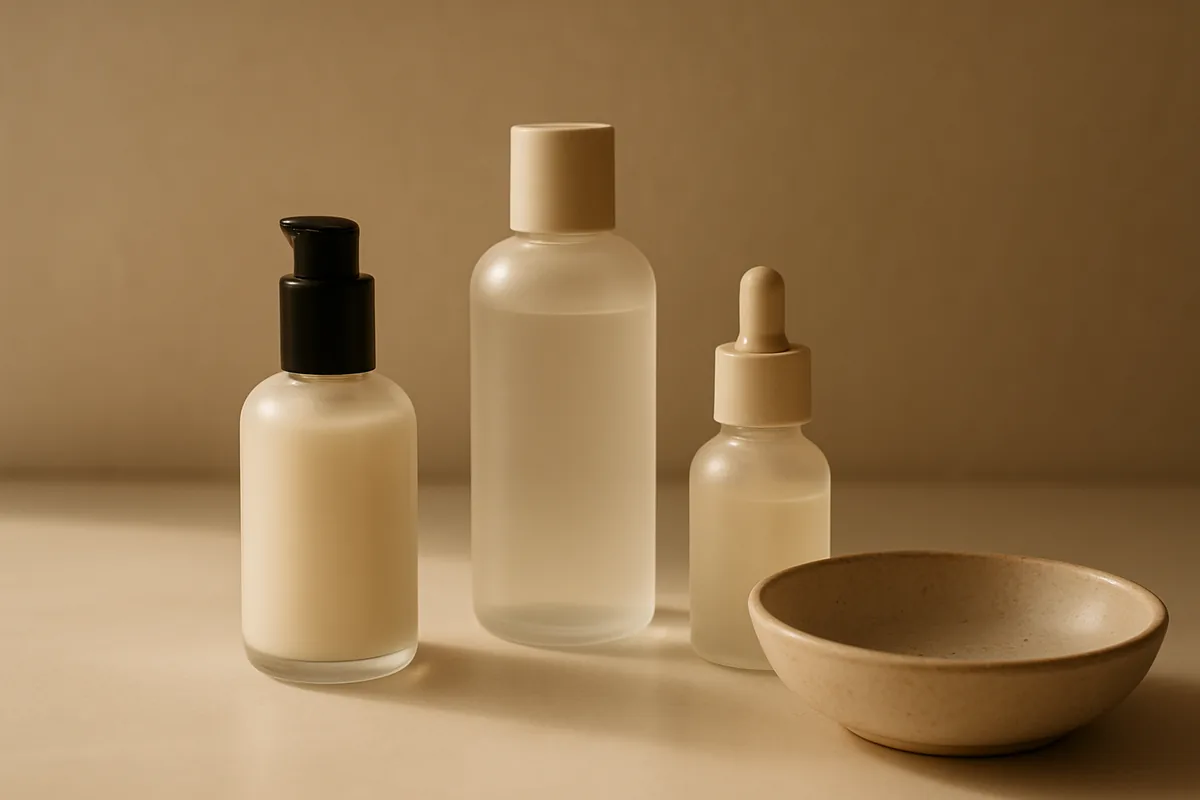
Cleansing
Cleansing is the routine category for removing surface residue, excess oil, sweat, and products left on the skin. Its role is to prepare the skin for whatever care follows, rather than to provide hydration or replace moisturizing. How often cleansing appears can depend on the time of day and what has been applied; a morning routine and an evening routine may not use the same approach.
Some routines use a water-based cleanser, while others include an oil-based cleanser to loosen makeup or water-resistant products before a second cleanse. This double-cleansing approach is one option, not a required pair of Korean skincare steps. The choice can depend on whether makeup or persistent sunscreen was worn and on the directions for each cleanser. A single cleanser may be sufficient for some routines.
Follow the product’s stated method, including whether it is intended for wet or dry skin and how it should be rinsed. Cleansing time and frequency can differ by formula and personal preference; more steps do not automatically mean a better fit. If a routine includes two cleansers, their order and use should follow their directions rather than an assumed universal sequence.
Hydration and moisturizing
Hydration and moisturizing are related but distinct categories. Hydration refers to adding or binding water at the skin’s surface; humectants, for example, attract and hold water. Moisturizing generally means supporting softness and reducing water loss, often through ingredients that soften the surface or form a more protective film. A product can contribute to both functions, so its role is not always determined by its format alone.
Hydrating layers may include lightweight liquids, while creams tend to feel richer and can provide a more substantial moisturizing finish. This is a practical distinction, not a fixed rule: formulas vary, and a lotion or cream can contain both humectant and emollient ingredients. In a Korean skincare routine, a person might use a hydrating step before a moisturizer, or choose one product that serves both purposes.
The arrangement depends on the purpose of the routine, the feel of the products, and their directions. Some products specify application to damp skin or recommend a particular interval before the next step; those instructions take priority over a general assumption about order. A routine intended to add hydration may emphasize a lighter layer, whereas one focused on reducing dryness may include a richer cream. Neither choice defines a universal routine, and multiple layers are not essential for everyone.
Daytime sun protection
Daytime sun protection is the routine category for using a sunscreen product as part of daytime care. Sunscreen labels use SPF to describe a measure related to UVB protection, while UVA labeling varies by market. These terms describe labeled product characteristics; they do not guarantee a particular result in every circumstance. Sun protection is separate from cleansing and moisturizing, even when all three categories appear in the same morning routine.
Some routines place sunscreen after moisturizing and before makeup, while others involve fewer preceding steps. The order can depend on the products being used and their directions, so there is no single sequence that applies to every Korean morning skincare routine. Allowing a product to settle before applying another layer may be suggested on its label, but the stated method for that product should guide use.
Amount, coverage, and reapplication instructions can vary between sunscreen products, and the package provides the relevant directions. A moisturizer or makeup product should not be treated as interchangeable with sunscreen unless its labeling specifically identifies sun protection and provides an SPF value. Choosing how this category fits into the day is therefore a matter of the routine and the labeled product instructions, not a fixed number of steps.
Layering and Routine Length
A Korean skincare routine can be arranged around how products feel on the skin, what their directions specify, and the role each step serves. A common starting point is to apply lighter, more fluid layers before richer ones, but texture alone does not decide every sequence. Product instructions and the way a combination wears on your skin can call for adjustments. Some routines use only a few steps, while others include more layers and require more time to apply. A longer routine is not required for every person; the useful format is one whose steps have clear, compatible purposes.
Layering by Texture and Directions
When several leave-on products are used, the thin-to-thick heuristic offers a practical starting order: watery textures usually go before creams or oils. It is a guide, not a rule that overrides product directions or how your skin responds.
- Texture: A watery fluid generally spreads more evenly beneath a thicker cream; compare how each product pours and absorbs rather than relying on its name.
- Directions: Read the label for specific application order, frequency, or instructions to use a product alone; follow these details over a general layering rule.
- Purpose: Identify the job of each layer, such as adding hydration or reducing moisture loss, and place it where it can perform that role.
- Compatibility in wear: Notice whether two products pill, slide, or leave an uncomfortable film when layered; these effects may make a different order or fewer layers more practical.
- Skin response: Pay attention to tightness, persistent tackiness, or discomfort after applying a combination, and reconsider the sequence or a layer that repeatedly causes a problem.
- Application amount: Consider whether the amount directed for each product can be spread without disturbing the layer beneath; excessive product can make even a sensible order feel heavy.
These criteria make the order a practical choice rather than a fixed checklist. If directions permit more than one sequence, use the order that applies smoothly and leaves each product comfortable on your skin.
Short and Involved Routines
A short routine usually involves fewer decisions and less application time, while a more involved version adds opportunities to tailor the sequence. The counts and times below are practical estimates, not required formats; drying time and product directions can change the total.
| Comparison | Short routine | More involved routine |
|---|---|---|
| Step count | About 3–4 steps, with only the products needed for the routine’s basic aims. | About 7–10 steps, with additional layers or treatments selected for specific purposes. |
| Application time | Often around 3–5 minutes when products are applied consecutively and no special wait is directed. | Often around 8–15 minutes, depending on the number of layers and any stated application intervals. |
| Decision-making | Fewer choices: select the needed steps and follow their order and directions. | More choices: consider which added layers fit together, their textures, and their individual directions. |
| Flexibility | Easy to repeat with a small number of products; fewer steps need to be adjusted when preferences change. | More room to vary layers, but each addition creates another decision about purpose, order, and comfort. |
Neither format is best for everyone. A three- or four-step plan may suit someone who wants a simpler sequence, while a longer plan can offer more choices to someone who values them and has time to apply each layer. More steps do not automatically mean better results, and there is no need to build a ten-step routine simply to follow a popular format. Choose a manageable length, then retain only layers that fit the intended routine and their directions.
Checking Each Step’s Purpose
Before keeping a product in a routine, check its role and whether it works alongside the other layers. These questions can help make each step earn its place:
- What specific role does this step serve, and can you name it without repeating the purpose of another product?
- Does another layer already provide the same function, making this step unnecessary for the routine you want?
- Do the product directions fit the order, frequency, and other products in the sequence?
- Does the layer apply smoothly in the amount directed, or does it regularly pill, slide, or feel unpleasant?
- After using the routine, does this step remain acceptable in time, effort, and comfort, rather than being kept only to reach a particular step count?
If a step has no distinct role or does not fit its directions, reconsider including it. A routine remains coherent when every retained layer has a clear reason to be there.
Adapting the Approach to Personal Needs
A Korean skincare routine can be adjusted to fit a person’s schedule, product preferences, and experience with individual formulas. The number of steps matters less than the reason for including each product and whether it suits everyday use. Beginners can start with a small selection rather than buying a complete set. A few deliberate choices make it easier to notice which parts feel comfortable and practical.
Simplifying Routine Steps
A simpler routine is easier to assess when every product has a clear role. Review the products already in use, then make changes gradually rather than replacing several items at once.
- Write down the purpose of each product, such as removing makeup or adding moisture, and set aside items whose role is unclear.
- Compare products that seem to serve the same purpose; keeping one preferred option can reduce repetition without requiring a complete routine reset.
- Read each label for frequency and application directions, since some formulas are intended for occasional use rather than every morning or evening.
- Choose changes that fit actual preferences, such as keeping a lightweight formula if richer textures tend to feel uncomfortable during the day.
- Introduce one new product or remove one existing choice at a time, leaving other routine steps unchanged while you observe the difference.
- Keep a short note of the product, date, and any noticeable change in comfort; this can help distinguish a useful adjustment from a passing preference.
A practical starting point is to keep familiar products that feel comfortable and pause choices that add no clear value to the routine. When evaluating a new option, follow its stated directions and avoid changing several products during the same period.
Responding to Individual Preferences
Texture and finish can influence whether a routine feels suitable in daily use. A person who dislikes a tacky finish may prefer a lighter serum or cream, while someone who finds a thin lotion insufficiently comfortable may choose a richer face cream. Neither preference makes one format universally better; the useful comparison is how each option feels after application and under makeup or other products. Available time also matters. A routine that takes five minutes before work may be more realistic than one requiring several pauses between applications, while an evening routine can be adjusted around a person’s usual schedule. Product directions still guide how often an item is used, but there is no need to add steps simply to match a particular step count. Individual responses can vary with season, indoor heating, humidity, and changes in other products. Notice whether a formula feels comfortable across several uses, and consider changing only that choice if its texture or finish is consistently unwelcome. A routine can remain flexible: retain the products that fit your preferences, adjust those that do not, and revisit the selection as everyday needs change.