
What to Check Before Layering
Before settling on a skincare routine order, check what each product is designed to do and how its label says to use it. A rinse-off mask and a leave-on serum, for example, cannot be treated as interchangeable steps. Directions may specify whether skin should be damp or dry, whether a product needs rinsing, or whether another step should come before it. Texture can help you arrange products when directions leave room for choice, but it should not override a product-specific sequence.
Product directions and intended use
Read the label before placing a product in your routine: its purpose and directions can determine whether it belongs among rinse-off steps or leave-on care. Make these four checks:
- Use: Identify whether the product is a cleanser, toner, treatment, mask, or moisturizer; its intended job helps distinguish a leave-on step from one that must be rinsed.
- Skin condition: Check whether directions specify applying to damp or dry skin, since that detail can affect where the product fits and how it is used.
- Timing: Look for instructions such as morning use, evening use, or a stated interval before another product; follow the timing printed on the label.
- Sequence: Note any explicit order, such as applying a treatment after cleansing or letting a product dry before the next step, rather than relying on a generic rule.
These checks are especially useful when a product has a specific application method or a short set time. Place it according to its stated purpose and directions; if those instructions give a sequence, follow that sequence.
Texture and adding products gradually
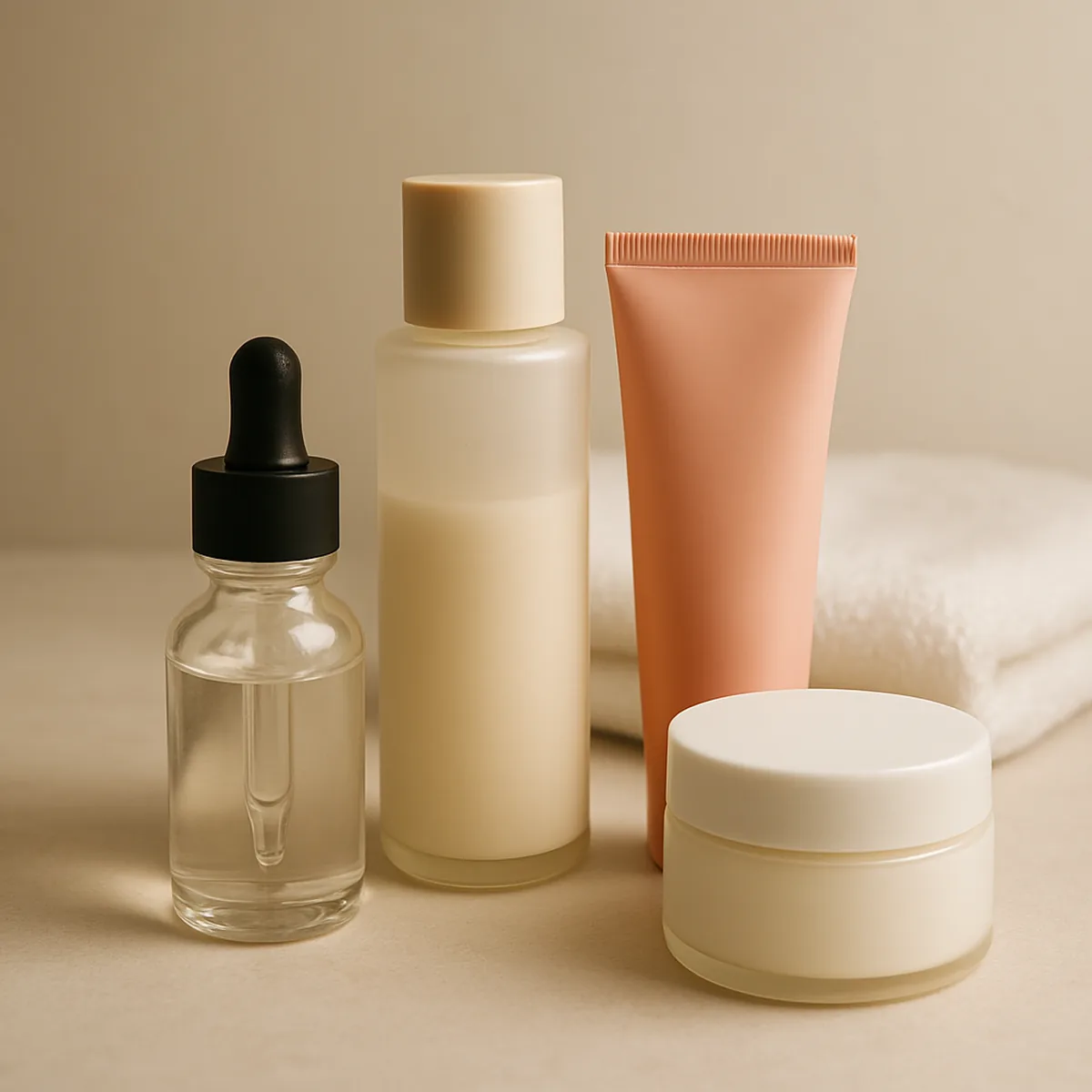
When product directions do not specify a sequence, texture offers a practical clue. A watery toner or essence usually spreads more easily before a creamy lotion, while a rich balm may feel more comfortable as a later layer. The common “thinnest to thickest” approach can help you decide how to layer skincare products, but it is only a heuristic: a label’s instructions take priority if they call for a different order. Pay attention to how products spread and settle, rather than judging by the name on the bottle alone. Two serums can have very different consistencies, and a lightweight gel may be less occlusive than a cream. If a formula pills or sits unevenly, review its directions and simplify the combination instead of adding more layers. Introduce one unfamiliar product at a time while keeping the rest of your routine stable. That makes it easier to track what you have added and notice whether the new formula changes how existing products feel or apply. Once its place and texture are familiar, assess another new product separately. Start with directions, then use texture to settle any remaining order questions.
A General Order for Routine Steps
A practical skincare routine order moves from cleansing to selected leave-on products, then to moisturizer and, in the morning, sun protection. This sequence gives each step a clear place without requiring every routine to include toner, essence, serum, or treatment. Product texture can help with layering, but the label and intended use matter more than a rigid rule. Use the steps that suit your routine and follow any directions that specify a different order.
Start with cleansing
Cleansing is a common opening step because it removes surface residue before leave-on products are applied. In a morning routine, a cleanser may be part of the sequence; in the evening, cleansing commonly comes first when removing the day’s products. The right place and method depend on the routine and the cleanser’s directions, including whether it is intended for wet or dry skin and whether it should be rinsed away.
Follow the product label for how much to use, how to apply it, and when to rinse. A rinse-off cleanser should not be treated like a leave-on treatment, and a product with specific use instructions should be used as directed. For a simple start, choose the cleanser step that fits the routine, complete it as instructed, and move on only when the skin is ready for the next product.
Apply other leave-on steps
After cleansing, selected leave-on products commonly go on before moisturizer. Applying skincare from thinner to thicker textures can be a useful starting point, while the product directions determine the sequence when a formula gives specific instructions.
- Toner: A toner may follow cleansing; check whether its directions call for hands or a cotton pad, then let the product settle before the next step.
- Essence: An essence is another optional post-cleansing layer, often applied before a thicker serum when the product directions do not specify otherwise.
- Serum: A serum commonly fits after toner or essence and before moisturizer; follow its label for the amount and frequency of use.
- Targeted treatment: A spot treatment or other focused product may have its own placement instructions, so use those directions rather than assuming it belongs in one fixed position.
- Exfoliating leave-on product: If included, this category follows its stated use sequence; it does not need to be added simply to fill a step.
Not every routine needs all five categories, and combining several is not required for an effective sequence. For serum and moisturizer order, serum before moisturizer is a common arrangement, but directions for a particular product can change where it belongs.
Finish with moisturizer and daytime protection
Moisturizer is a common finishing step for leave-on products because it adds a layer of hydration and helps reduce water loss from the skin’s surface. In a morning sequence, apply it after the selected toner, essence, serum, or treatment when those steps are part of the routine. Some products combine moisturizing and sun-protection functions, so check the label rather than automatically adding a separate layer.
When sunscreen is used in the morning, it goes at the end of the skincare sequence: moisturizer before sunscreen is the usual order when both are separate products. This places daytime sun protection after the other leave-on steps, rather than treating it like an evening product. Nighttime routines do not end with daytime sunscreen, and their final step may simply be moisturizer or another product directed for evening use. The practical sequence is to finish with moisturizer, then apply morning sunscreen last when used, while following product-specific directions if they differ.
How Morning and Evening Order Can Differ
The difference between morning and evening routines is mainly the role each sequence serves. A morning routine includes daytime sun protection, while an evening routine can focus on the leave-on products used at night. Some products appear in both routines, but their placement may depend on their directions and the other products being used. Keeping the two sequences distinct makes it easier to follow the skincare routine order without adding steps simply to make the routines look different.
Daytime protection and evening steps
Morning and evening steps may share familiar products, but daytime sun protection gives the morning sequence a distinct final step. Product directions determine the order when a label specifies how or when to apply a treatment.
| Aspect | Morning | Evening |
|---|---|---|
| Purpose | Prepare skin for daytime exposure and include sun protection. | Apply the products intended for the nighttime routine. |
| Typical sequence | Steps 1–3: cleanser, optional leave-on products, moisturizer; step 4: sunscreen. | Steps 1–3: cleanser, directed leave-on products, moisturizer as needed. |
| Sun protection | Use sunscreen as the final skincare step; follow its label for application. | Daytime sunscreen is not a usual nighttime step. |
| Product placement | Place sunscreen after moisturizer when both are used, unless product directions say otherwise. | Place nighttime treatments according to their directions and the routine’s other products. |
The table shows a common pattern, not a fixed formula: instructions on a product can change its position, and a combined product may reduce the number of separate steps. The key difference is that sunscreen belongs to the daytime sequence, not the usual nighttime one.
Keep two routines manageable
Write the morning and evening steps on separate lines in a bathroom note or phone reminder. For example, mark “AM” beside sunscreen and “PM” beside a product whose directions specify nighttime use; this makes the difference visible without relying on memory.
Keep the sequence consistent from day to day, and list only products you actually use. If a step has no clear role or duplicates another product, remove it and check whether the routine still covers its intended purpose. You do not need a different product for every time of day: a cleanser or moisturizer may suit both sequences when its directions allow it.
Keep each routine if you can name the purpose of every step and follow the product directions in the same order; otherwise, simplify the list.
Common Layering Mistakes
A skincare routine can become harder to follow when products are added without a clear purpose or used differently from their labels. Directions may specify an amount, frequency, application method, or sequence, so check them rather than relying on a universal skincare routine order. A category such as toner, essence, or face oil is optional unless it serves a role you want in your routine. A brief product-by-product review can make the sequence simpler and easier to repeat.
Skipping directions or adding needless steps
Product labels are more useful than assumptions: they may give a specific amount, frequency, or application sequence. Adding a new step simply because it appears in a routine online can also leave you with products that have no clear role. Use this five-point review to trim the sequence:
- Read each label and note its stated amount, frequency, application method, and any order instructions before placing the product in your routine.
- Write one purpose beside each product, such as cleansing or adding moisture; if you cannot name a role, set it aside for review.
- Look for several products serving the same purpose, then decide whether each one adds something you specifically want rather than keeping all by default.
- Check how many steps you can follow consistently on an ordinary morning or evening; remove optional additions that make the routine difficult to repeat.
- When considering a new product, identify the gap it would fill and choose whether it replaces an existing step or has a distinct role.
Keep products whose purpose is clear and whose directions fit the way you can use them. A beginner skincare routine can be short; no product category is mandatory simply because it is common in a skincare layering guide.
Reset the sequence simply
To rebuild an overcomplicated routine, put every product aside and check its directions before arranging anything. Note the sequence each label gives, along with any stated amount or frequency, so the products are not being used from memory alone. Next, retain only the steps with a clear role for you; set aside extras that do not address a specific preference or need. Arrange the remaining products according to their directions, and write the order somewhere visible if it is easy to forget. If a label does not state an order, use the product’s instructions and format to decide where it fits, rather than adding another step to compensate. Try the simpler sequence as written, then review it only when you have a concrete reason to change it. A short, repeatable routine is a practical starting point; keep the steps that earn their place.